GrayCharlie Hijacks Law Firm Sites in Suspected Supply-Chain Attack
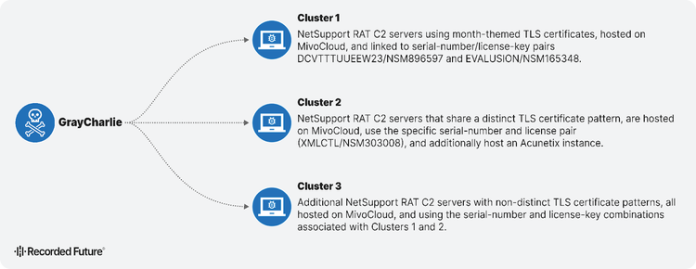
Executive Summary Insikt Group has been monitoring GrayCharlie, a threat actor overlapping with SmartApeSG and active since mid-2023, for some time, and is now publishing its first report on the group. GrayCharlie compromises WordPress sites and injects them with links to externally hosted JavaScript that redirects visitors to NetSupport RAT payloads delivered via fake browser update pages or...
DNS-PERSIST-01: A New Model for DNS-based Challenge Validation

When you request a certificate from Let’s Encrypt, our servers validate that you control the hostnames in that certificate using ACME challenges. For subscribers who need wildcard certificates or who prefer not to expose infrastructure to the public Internet, the DNS-01 challenge type has long been the only choice. DNS-01 works well. It is widely supported and battle-tested, but...
Cyber attacks enabled by basic failings, Palo Alto analysis finds
Cyberattacks are moving faster, shrinking the gap between initial compromise and bad consequences, and the advent of AI is accelerating their timelines in a way that human defenders can no longer keep up with. That’s the broad and perhaps unsurprising finding of Palo Alto Networks’ 2026 Global Incident Response Report, which analyzed 750 incidents in...
Malware in the Wild as Malicious Fork of Legitimate Triton App Surfaces on GitHub
A malicious fork of the legitimate macOS application Triton has surfaced on GitHub, exploiting open-source repositories to distribute malware. The fraudulent repository, created under the account “JaoAureliano,” appeared as a copy of the original Triton app developed by Otávio C. Instead of providing genuine software, the fork redirected users to download a ZIP file containing Windows-based malware. The...
A New Denial-of-Service Vector in React Server Components
React Server Components (RSC) have introduced a hybrid execution model that expands application capabilities while increasing the potential attack surface.
Following earlier disclosures and fixes related to React DoS vulnerabilities, an additional analysis of RSC internals was conducted to assess whether similar denial-of-service risks remained.
This analysis identified a new denial-of-service (DoS) condition that, under specific circumstances, can render a React...
AI in the Middle: Turning Web-Based AI Services into C2 Proxies & The Future Of AI Driven Attacks
Key Points
Check Point Research (CPR) has discovered that certain AI assistants that support web browsing or URL fetching can be abused as covert command-and-control relays (“AI as a proxy”), allowing attacker traffic to blend seamlessly into legitimate, commonly permitted enterprise communications. This technique was demonstrated against platforms such as Grok and Microsoft Copilot, leveraging anonymous web access combined...
[R2] Stand-alone Security Patches Available for Tenable Security Center versions 6.5.1, 6.6.0 and 6.7.2: SC-202602.1 + SC-202602.2
Stand-alone Security Patches Available for Tenable Security Center versions 6.5.1, 6.6.0 and 6.7.2: SC-202602.1 + SC-202602.2 Arnie Cabral Tue, 02/17/2026 - 08:32
Security Center leverages third-party software to help provide underlying functionality. Several of the third-party components (Apache, PHP, libcurl) were found to contain vulnerabilities, and updated versions have been made available by the providers.Out of caution and...
Siemens Simcenter Femap and Nastran
View CSAF
Summary
Siemens Simcenter Femap and Nastran is affected by multiple file parsing vulnerabilities that could be triggered when the application reads files in NDB and XDB formats. If a user is tricked to open a malicious file with any of the affected products, this could lead the application to crash or potentially lead to arbitrary code execution. Siemens has...
Western cyber alliances risk fragmenting in new world order
The conduct of powerful nations is causing knock-on effects in the cyber world as long-standing security frameworks appear increasingly precarious - Read more
Divide and conquer: how the new Keenadu backdoor exposed links between major Android botnets

In April 2025, we reported on a then-new iteration of the Triada backdoor that had compromised the firmware of counterfeit Android devices sold across major marketplaces. The malware was deployed to the system partitions and hooked into Zygote – the parent process for all Android apps – to infect any app on the device. This allowed the Trojan to...
Latest article
Threat tactic spotlight: Subdomain takeover
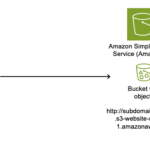
In this blog post you’ll learn how to detect and prevent subdomain takeover – a tactic where threat actors exploit dangling DNS records to...

The Half-Life of Threat Intelligence: When Does an IOC Stop Being Useful?
The concept of the IOC — the Indicator of Compromise — sits at the operational heart of modern threat detection. Block the IP. Flag...

Best Prime Day Tech Deals: Apple, Bose, Garmin, and More
Shop early Amazon Prime Day tech deals on earbuds, mice, routers, doorbells, headphones, smartwatches, Android phones, and fitness watches.
The post Best Prime Day Tech...
SprySOCKS Backdoor Expands From Linux to Windows
China-linked SprySOCKS backdoor gains stealthy Windows variants and 30-plus C2 commands - Read more