The concept of the IOC — the Indicator of Compromise — sits at the operational heart of modern threat detection. Block the IP. Flag the domain. Quarantine the hash. The logic is clean and satisfying. But embedded in every IOC is an invisible timestamp that most detection pipelines never read.
Intelligence ages. It decays. And the rate at which it decays is faster than almost any organization’s processes are designed to handle. The question is not whether your intelligence will become stale. The question is whether it will become stale before your security team acts on it.
The Problem with Static Intelligence
Many organizations treat threat intelligence as a collection of facts. Once an indicator is identified as malicious, it is added to a blocklist, a SIEM watchlist, or an internal database where it may remain for months or even years.
The problem is that threat intelligence is not a static asset. It is a constantly changing stream of observations about adversary behavior.
Attackers know defenders rely on IOCs. As a result, they have become increasingly effective at rotating infrastructure, generating new domains, and deploying short-lived assets designed to stay ahead of detection.
This means that a malicious IP observed today may lose its value far sooner than many security teams expect.
The Decay Rates: Not All IOCs Age the Same
IP Addresses are the most volatile indicators in common use. Research from multiple threat intelligence vendors consistently finds that over 50% of malicious IP addresses go dark within a week of initial observation. After 30 days, the vast majority are either offline, reassigned, or hosting entirely benign services.
Domains have a slightly longer useful life, but not by much. Malicious domains used in phishing and malware distribution are typically active for days to a few weeks before being taken down or abandoned. Command-and-control domains are often rotated as a matter of operational security — generating new domains algorithmically (a technique known as domain generation algorithms, or DGAs) specifically to defeat static block lists.
URLs are even shorter-lived than domains. A spear-phishing URL pointing to a credential-harvesting page may be valid for twelve hours — just long enough to catch the targeted victim — before the page is taken down, the URL structure is rotated, or the hosting provider intervenes.
Behavioral Indicators based on tactics, techniques, and procedures (TTPs) often have the longest lifespan. While attackers change infrastructure frequently, changing operational behavior is much more difficult. This is one reason mature security teams increasingly combine IOC-based detection with behavioral intelligence.
The Hidden Risk of Stale Intelligence
Many organizations focus on obtaining more threat intelligence but spend little time evaluating its freshness. This creates several problems.
- First, stale indicators increase noise. Security controls may generate alerts for infrastructure that is no longer malicious, consuming analyst time and attention.
- Second, outdated intelligence can create a false sense of security. A SOC may believe it is protected because millions of indicators are being ingested, even though a significant portion of them no longer reflect current threats.
- Third, excessive reliance on aging indicators can divert resources away from detecting new attack infrastructure and emerging campaigns.
In other words, outdated intelligence can become operational baggage rather than a security advantage.
A smaller collection of highly relevant, continuously updated indicators may provide more operational value than a massive repository of aging data. For SOC teams, freshness directly affects detection quality, investigation speed, and confidence in automated response workflows.
For CISOs, it influences overall cyber resilience. The faster intelligence reflects changes in the threat landscape, the faster the organization can adapt its defenses.
The Competitive Advantage of Fresh Threat Intelligence
If threat intelligence is perishable, then the quality of a feed depends not only on the number of indicators it contains, but also on how quickly those indicators are discovered, validated, and delivered to defenders.
ANY.RUN Threat Intelligence Feeds are designed with this challenge in mind. Instead of relying solely on third-party sources, the feeds are continuously enriched with indicators extracted from real malware and phishing activity analyzed in the ANY.RUN Interactive Sandbox.
The professional community generating this data is substantial: over 600,000 security professionals and analysts across more than 15,000 organizations submit samples continuously. The result is a feed grounded in what malware is doing right now, not what it was doing when someone filed a report last week.
Freshness is a critical advantage. As attackers increasingly rotate infrastructure and launch short-lived campaigns, delays of even a few hours can reduce the operational value of an IOC. By continuously collecting and processing new threat data, ANY.RUN helps organizations receive actionable indicators while they are still relevant to ongoing attacks.
Fresh intelligence drives faster detection. Try ANY.RUN TI Feeds to help your team enrich alerts, automate workflows, and respond to emerging threats with confidence.
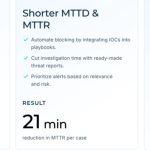
The feeds can be integrated directly into existing security operations workflows, including SIEM, EDR, SOAR, XDR, TIP, firewall, and other security platforms. This enables automated enrichment, threat detection, alert prioritization, and blocking actions without requiring analysts to manually search for indicators across multiple sources.
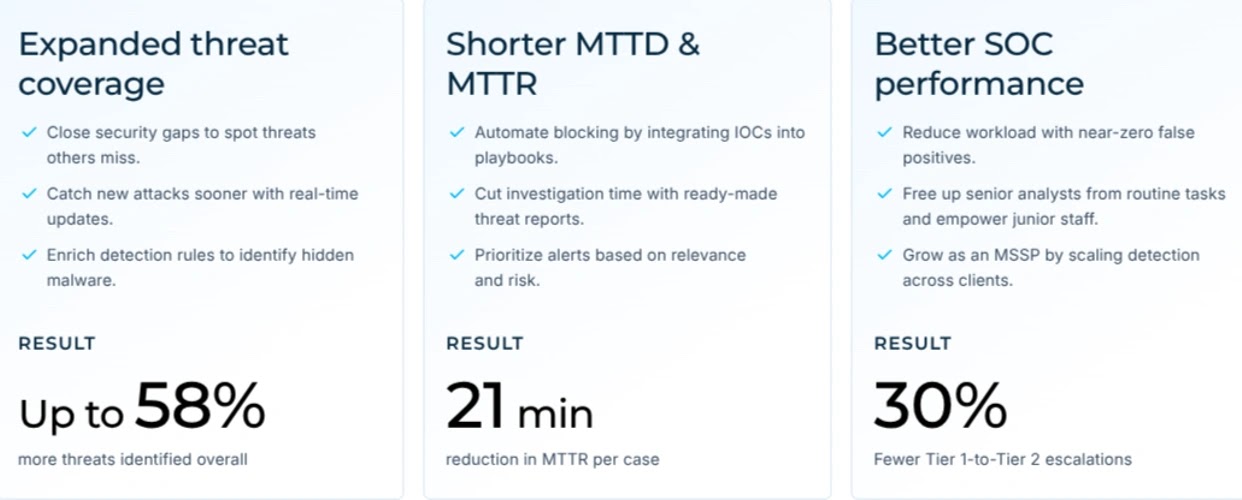
For SOC teams, this means less time spent validating suspicious artifacts and more time focused on high-priority investigations. For CISOs, it means greater confidence that security controls are operating with intelligence that reflects today’s threat landscape rather than yesterday’s.
In a world where the useful life of many indicators is measured in days, hours, or even minutes, access to continuously refreshed intelligence can make the difference between detecting an attack early and discovering it after the damage is done.
Conclusion
Threat intelligence loses value over time. The challenge for modern security teams is not simply collecting more indicators, but ensuring those indicators remain relevant when decisions need to be made.
As threat actors accelerate infrastructure rotation and launch increasingly short-lived campaigns, stale intelligence can introduce noise, create blind spots, and slow response efforts. Organizations that prioritize intelligence freshness gain a significant advantage: they can identify threats sooner, improve detection accuracy, and make better-informed security decisions.
Turn continuously updated threat data into actionable defense with ANY.RUN Threat Intelligence Feeds, Start now.
The post The Half-Life of Threat Intelligence: When Does an IOC Stop Being Useful? appeared first on Cyber Security News.