


How do file partner programs work?
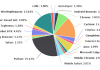
It’s easy to notice if you’ve fallen victim to an advertising partner program: the system has new apps that you didn’t install, ad pages...

A mining multitool
Recently, an interesting miner implementation appeared on Kaspersky Lab’s radar. The malware, which we dubbed PowerGhost, is capable of stealthily establishing itself in a...

A study of car sharing apps
The growing popularity of car sharing services has led some experts to predict an end to private car ownership in big cities. The statistics...

Calisto Trojan for macOS
An interesting aspect of studying a particular piece of malware is tracing its evolution and observing how the creators gradually add new monetization or...

The return of Fantomas, or how we deciphered Cryakl
In early February this year, Belgian police seized the C&C servers of the infamous Cryakl cryptor. Soon afterwards, they handed over the private keys...

Coinvault, the court case
Today, after almost 3 years of waiting, it was finally the day of the trial. In the Netherlands, where the whole case took place,...

APT Trends Report Q2 2018
In the second quarter of 2017, Kaspersky Lab’s Global Research and Analysis Team (GReAT) began publishing summaries of the quarter’s private threat intelligence reports,...

To crypt, or to mine – that is the question
Way back in 2013 our malware analysts spotted the first malicious samples related to the Trojan-Ransom.Win32.Rakhni family. That was the starting point for this...

Ransomware and malicious crypto miners in 2016-2018
Ransomware is not an unfamiliar threat. For the last few years it has been affecting the world of cybersecurity, infecting and blocking access to...

Pbot: evolving adware
The adware PBot (PythonBot) got its name because its core modules are written in Python. It was more than a year ago that we...
Latest article

Why AI, Zero Trust, and modern security require deep visibility
AI. Automation. Zero Trust. They dominate every security strategy document. But there’s a truth sitting underneath all three: none of them...
Samsung MagicINFO Server Multiple Vulnerabilities
Samsung MagicINFO Server Multiple Vulnerabilities MagicINFO User Credential Disclosure (CVSS:3.1/AV:L/AC:L/PR:L/UI:N/S:U/C:H/I:H/A:H)NOTE: Samsung mentioned this item may have been fixed with version 21.1090.1, but we were...
Perplexity AI Browser Flaw Could Let Calendar Invites Access Local Files
Researchers say a vulnerability in Perplexity’s Comet AI browser could expose local files and credentials through malicious calendar invites.
The post Perplexity AI Browser Flaw...

Tycoon 2FA Phishing Kit Disrupted by Microsoft, Europol and Partners
Microsoft, Europol, and partners have dismantled the Tycoon 2FA phishing-as-a-service (PhaaS) platform, seizing 330 domains used for credential theft and MFA bypass. This coordinated...