Home Blog
Four security principles for agentic AI systems

Agentic AI represents a qualitative shift in how software operates. Traditional software executes deterministic instructions. Generative AI responds to human prompts with output that humans review and use at their discretion. Agentic AI differs from both. Agents connect to software tools and APIs and uses large language models (LLMs) as reasoning engines to plan and execute sequences...
The democratisation of business email compromise fraud

Welcome to this week’s edition of the Threat Source newsletter.Last weekend, I witnessed a crime. Not a notable crime that you might read about in the press, but an unremarkable fraud attempt that nevertheless illustrates how new threat actor capabilities are emerging.I imagine that most people reading this probably field IT questions from friends, family, and your local community....
How Elite SOCs Cut Escalation Rates by Arming Tier 1 With Better Threat Intelligence
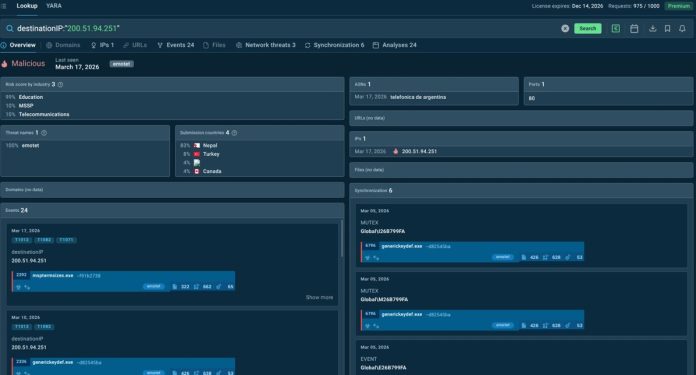
In a mature Security Operations Center, escalation is supposed to work like a scalpel, precise, intentional, and reserved for alerts that genuinely demand deeper expertise. But across many teams today, it has become something far less disciplined: a reflex, a pressure valve, a way to pass uncertainty up the chain. The consequences are predictable. Tier 2 drowns in rerouted...
Identity and AI: Questions of data security, trust and control
The Computer Weekly Security Think Tank considers the intersection of AI and IAM. In this article, learn how AI-driven IAM projects must account for important questions around data protection, user trust, accountability and control. - Read more
EvilTokens abuses Microsoft device code flow for account takeovers
A new phishing-as-a-service (PhaaS) campaign is abusing Microsoft’s device code authentication flow to gain unauthorized access to user accounts. Sekoia researchers first spotted the toolkit “EvilTokens” that lets attackers capture authentication tokens by tricking users into completing a legitimate login process in Microsoft’s own environment. The activity, observed since at least mid-February, relies on social...
Siemens SICAM 8 Products
View CSAF
Summary
Multiple SICAM 8 products are affected by multiple vulnerabilities that could lead to denial of service, namely: - SICAM A8000 Device firmware - CPCI85 for CP-8031/CP-8050 - SICORE for CP-8010/CP-8012 - RTUM85 for CP-8010/CP-8012 - SICAM EGS Device firmware - CPCI85 - SICAM S8000 - SICORE - RTUM85 Siemens has released new versions for the affected products and...
The AI Security Compliance Gap: Fighting Polymorphic Phishing While Staying Regulatory Ready
As cyber threats evolve, organisations face a growing dilemma: how to defend against increasingly sophisticated phishing attacks while staying compliant with expanding data protection and cybersecurity regulations.As we’ve identified many times recently, security teams are under pressure from both sides. On one hand, we’ve seen in our most recent threat trends report, polymorphic phishing attacks are evolving faster than...
Iran Threatens to Attack Apple, Google, and Other US Tech Firms in Middle East
Iran has threatened multiple US tech giants in the Middle East, escalating tensions and raising fears of AI-driven warfare turning physical.
The post Iran Threatens to Attack Apple, Google, and Other US Tech Firms in Middle East appeared first on TechRepublic. - Read more
New Venom Stealer MaaS Platform Automates Continuous Data Theft
Venom Stealer malware-as-a-service automates ClickFix social engineering, credential and crypto exfiltration - Read more
What CISOs Should Expect from AI Powered MDR in 2026, According to Rapid7 CEO Corey Thomas
In the latest episode of Rapid7’s Experts on Experts, I’m joined by Rapid7 CEO Corey Thomas for a candid conversation about where AI is genuinely changing security operations, and where the hype still outruns reality. The short version is that AI is already improving productivity in software development, but the bigger shift for security leaders is what it can...
Latest article

Four security principles for agentic AI systems
Agentic AI represents a qualitative shift in how software operates. Traditional software executes deterministic instructions. Generative AI responds to human prompts with...

The democratisation of business email compromise fraud
Welcome to this week’s edition of the Threat Source newsletter.Last weekend, I witnessed a crime. Not a notable crime that you might read about...
How Elite SOCs Cut Escalation Rates by Arming Tier 1 With Better Threat Intelligence
In a mature Security Operations Center, escalation is supposed to work like a scalpel, precise, intentional, and reserved for alerts that genuinely demand deeper...
Identity and AI: Questions of data security, trust and control
The Computer Weekly Security Think Tank considers the intersection of AI and IAM. In this article, learn how AI-driven IAM projects must account for...