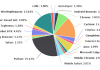



What kids get up to online
Today’s children navigate the Internet better than adults. They are not afraid to try out new technology, and are quick to grasp new trends...

Platinum is back
In June 2018, we came across an unusual set of samples spreading throughout South and Southeast Asian countries targeting diplomatic, government and military entities....

Zebrocy’s Multilanguage Malware Salad
Zebrocy is Russian speaking APT that presents a strange set of stripes. To keep things simple, there are three things to know about Zebrocy
Zebrocy...

IT threat evolution Q1 2019. Statistics
These statistics are based on detection verdicts of Kaspersky Lab products received from users who consented to provide statistical data.
Quarterly figures
According to Kaspersky Security...

DDoS attacks in Q1 2019
News overview
The start of the year saw the appearance of various new tools in the arsenal of DDoS-attack masterminds. In early February, for instance,...

Spam and phishing in Q1 2019
Quarterly highlights
Valentine’s Day
As per tradition, phishing timed to coincide with lovey-dovey day was aimed at swindling valuable confidential information out of starry-eyed users, such...

ScarCruft continues to evolve, introduces Bluetooth harvester
Executive summary
After publishing our initial series of blogposts back in 2016, we have continued to track the ScarCruft threat actor. ScarCruft is a Korean-speaking...

The 2019 DBIR is out
Once again, we are happy to support a large, voluntary, collaborative effort like the 2019 Data Breach Investigations Report. While our data contribution is...

FIN7.5: the infamous cybercrime rig “FIN7” continues its activities
On August 1, 2018, the US Department of Justice announced that it had arrested several individuals suspected of having ties to the FIN7 cybercrime...

APT trends report Q1 2019
For just under two years, the Global Research and Analysis Team (GReAT) at Kaspersky Lab has been publishing quarterly summaries of advanced persistent threat...
Latest article

Operation Endgame 4.0 – 153,527 breached accounts
On 18 June 2026, the latest phase of Operation Endgame targeted the SocGholish malware operation, a prolific malware distribution network used to compromise systems...
Accelerate security investigations with Kiro CLI
When a security event occurs in your Amazon Web Services (AWS) environment, rapid response is critical. However security teams often struggle with time-consuming, manual...

Close Encounters of the Human Kind
Welcome to this week’s Threat Source newsletter. I love a Spielberg summer. His ability to imbue a sense of wonder, awe, curiosity, and connection means he’s in a...
New iPhone BootROM Vulnerability Exposes Apple SoCs to Full Chain-of-Trust Compromise
A novel BootROM vulnerability, dubbed usbliter8, affects Apple devices powered by A12, S4/S5, and A13 SoCs. The exploit chains a hardware-level bug in the...