Overview
For years, organizations have prioritized strengthening technical defenses, including hardening networks, accelerating patch management, and expanding endpoint detection and response capabilities. Defensive systems have become more adaptive, identity has moved to the center of security architectures, and zero-trust has emerged as a foundational design principle.
Despite these advances, successful intrusions continue to occur in environments that appear technically mature. While traditional attack vectors like vulnerability exploitation, misconfigurations, and malware-based intrusions show no sign of decline, modern attacks are increasingly preceded or materially enabled by extensive reconnaissance conducted beyond the victim’s technical perimeter.
Organizations and their employees expose substantial volumes of data online, both intentionally and unintentionally. This includes professional and personal information shared through corporate websites, SaaS platforms, social media, developer repositories, marketing materials, and third-party services, as well as data exposed through breaches, misconfigured cloud assets, and shadow IT.
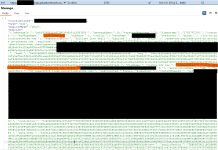
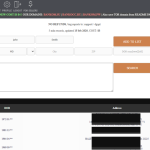
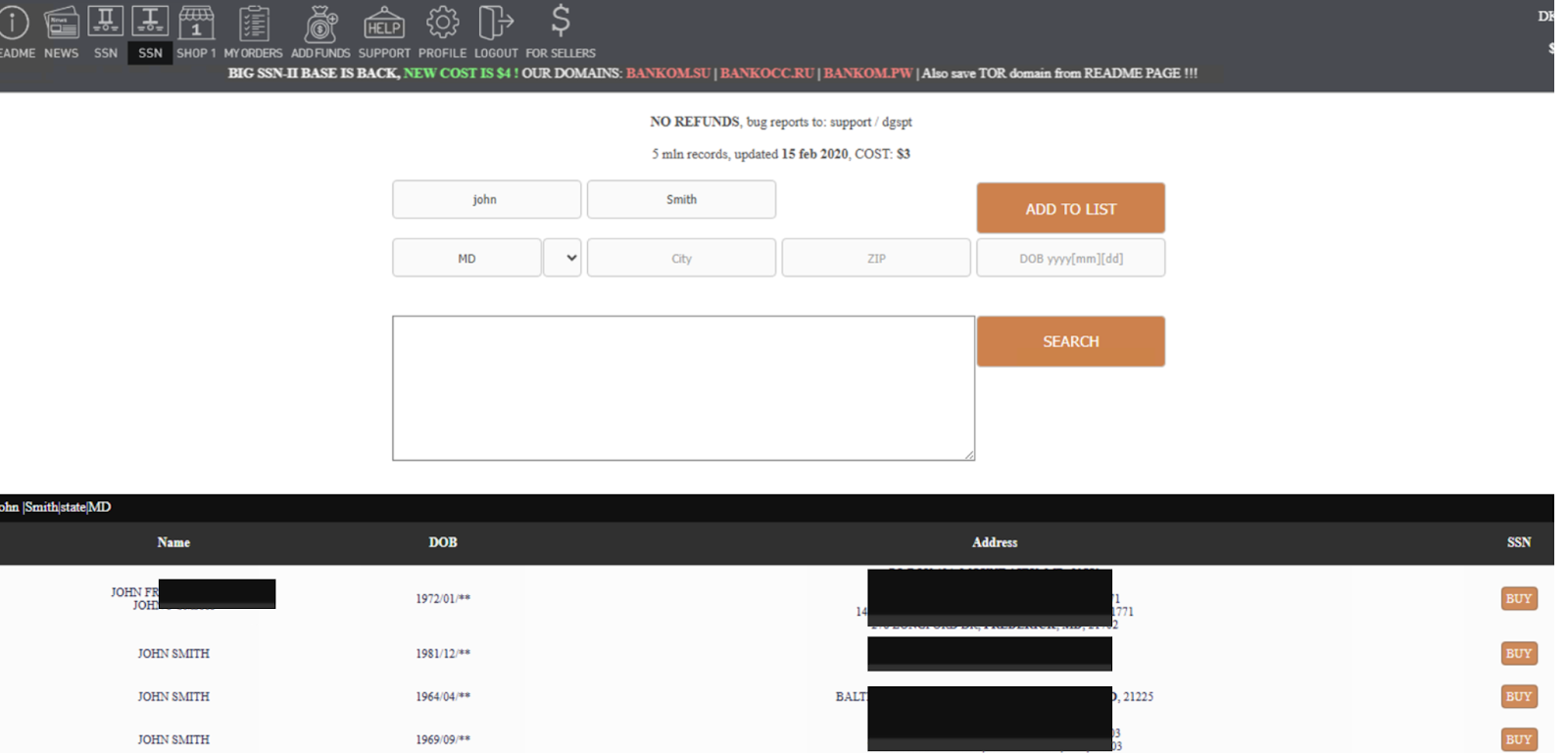
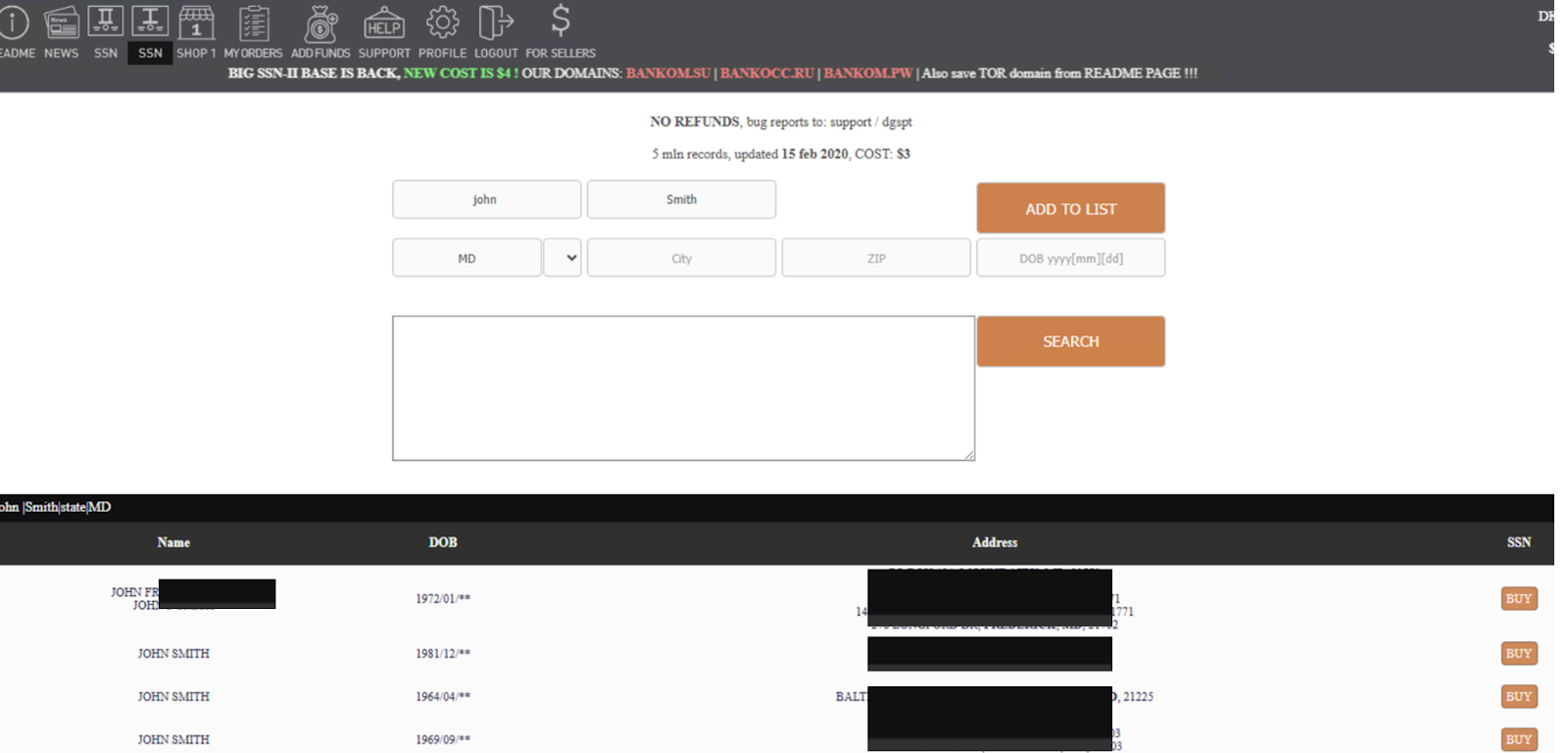
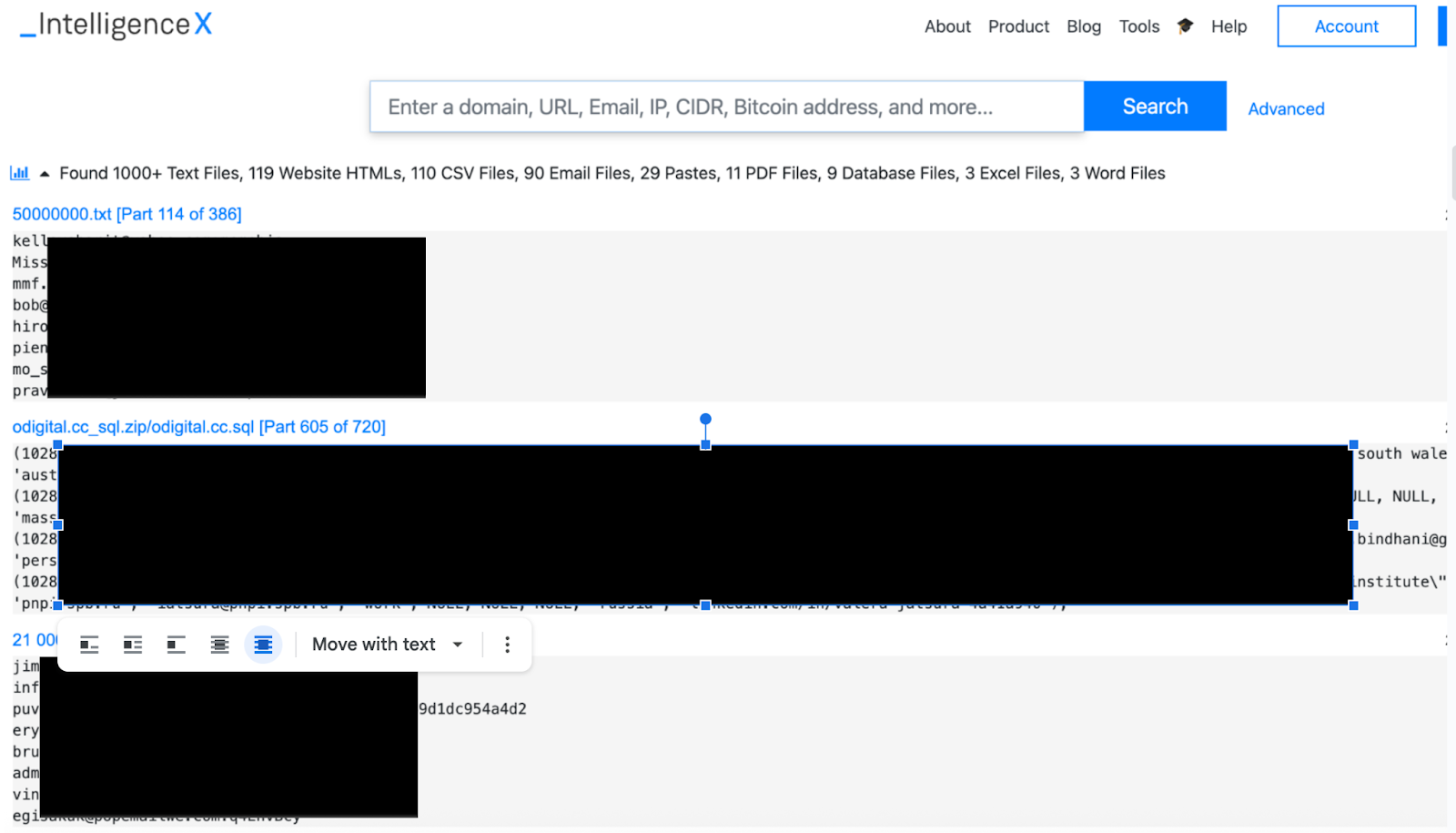
As seen in the following screenshots, vast amounts of historical information, credential leaks, personally identifiable information (PII) persist in exposed databases, as well as on dark web marketplaces and cybercrime forums.
⠀
⠀
⠀

⠀
Threat actors increasingly leverage this layered digital footprint as a core component of their operational planning. While such exposure may not always constitute the initial access vector itself, it significantly influences attacker decision-making, targeting precision, and the likelihood of success.
Breach data and open-source intelligence are utilized to map organizational structures, identify privileged or high-value identities, correlate reused credentials, infer security controls, and tailor phishing or social engineering campaigns with high contextual credibility. In many cases, this intelligence determines which vulnerability, account, or trust relationship is exploited, rather than whether exploitable weaknesses exist. As a result, the boundary between “technical” and “human” attack vectors continues to erode. Infrastructure security remains necessary, but it is no longer sufficient in isolation. The effective attack surface now extends beyond networks and endpoints to encompass identity exposure, employee digital behavior, third-party data ecosystems, and long-lived data traces that persist outside traditional security tooling and governance models.
What is digital footprint exposure?
A digital footprint refers to all the information about an organization and/or an individual that is publicly, semi-publicly, or commercially available online. This information is often scattered across numerous platforms, but aggregating it enables the creation of detailed, actionable profiles of individuals and institutions.
Typical elements of a digital footprint include:
-
Corporate and personal email addresses
-
Passwords and authentication data leaked through breaches
-
Public social media profiles and historical activity
-
Personally Identifiable Information (e.g., name, SSN, phone number, email address).
-
Employment history, job titles, role descriptions, and annual reports
-
Online behavior, interests, affiliations, and routines
-
Metadata collected and sold by third-party data brokers
The acquisition of this data does not require hacking, system intrusion, or the deployment of malware. Instead, attackers collect, correlate, and exploit information that exists beyond the organization’s security perimeter, making it inherently unreachable by conventional security controls such as firewalls, EDR, or internal monitoring systems. Because these digital assets reside outside direct organizational ownership and technical control, they cannot be effectively protected by traditional defensive mechanisms. In this context, threat intelligence monitoring plays a critical role by providing visibility into external data exposure, tracking adversarial collection and misuse of such information, and enabling organizations to detect, assess, and respond to risks that would otherwise remain invisible to perimeter-based security architectures.
Digital footprint exposure: A growing security threat
The modern threat landscape no longer rewards attackers who are simply skilled at exploiting systems; it rewards those who are best at understanding people, relationships, and behavior. Publicly accessible data, semi-private platforms, and commercially available datasets collectively form a digital footprint that can be mapped, enriched, and weaponized well before any technical intrusion attempt. This exposure shifts the initial battleground away from firewalls and endpoints toward employees’ online presence and the organization’s external data shadow.
Organizations that continue to define their perimeter in terms of IP ranges, devices, or cloud assets are defending yesterday’s battlefield. In many cases, the first stage of compromise occurs months before an alert is raised, within public forums, social networks, breached datasets, and data broker platforms, entirely outside traditional security monitoring and response processes. Adversaries use this information to identify key personnel, ascertain internal structures, map trusted relationships, and assess security maturity without ever touching corporate infrastructure.
Attackers collect specific external data to identify valid users, authentication systems, and internal dependencies. They extract employee names, roles, and corporate email formats from LinkedIn, conference materials, and public breach datasets. They identify authentication portals, VPN gateways, and cloud services using passive DNS records, Certificate Transparency logs, and internet scanning platforms such as Shodan or Censys. Public GitHub repositories and technical documentation may reveal internal domain names, API endpoints, identity providers, and technology stacks.
These elements allow attackers to identify valid corporate accounts, target employees with privileged access, register impersonation domains that match internal naming conventions, and send phishing emails that reference real vendors, systems, or workflows. This preparation increases the likelihood of credential theft and unauthorized access because the attacker is targeting real users and real systems rather than relying on generic phishing or random scanning.
For employees, digital footprint exposure translates into personal risk that directly impacts corporate security. Leaked credentials, reused passwords, overshared professional information, or historical data breaches can be exploited to impersonate staff, coerce access, or establish credibility during pretexting operations. Senior leaders, IT staff, and individuals with privileged access are particularly vulnerable, as attackers can leverage publicly available information to craft convincing narratives that exploit trust and authority.
Uncontrolled exposure of employee information allows attackers to move from targeting individuals to compromising the organization. This enables them to identify employees with access to key systems, administrative privileges, or sensitive organizational platforms through public work profiles and data obtained from data breaches. They then test exposed credentials on corporate login portals, send phishing emails impersonating trusted internal or external entities, or attempt to intercept authentication codes by targeting exposed phone numbers. Once a single employee account is compromised, attackers can gain access to internal systems, escalate their privileges, and move laterally within the organization.
Threat actor exploitation of digital footprints
Threat actors, whether cybercriminal groups or state-sponsored operators, have always relied heavily on digital footprints in their operations. Publicly available information, leaked data, social media activity, and professional networks provide valuable insight into people, organizations, technologies, and trust relationships, making attacks more targeted and believable.
With the rise of AI-powered tools, this exploitation has intensified. What once required time-consuming manual research can now be automated, enriched, and scaled almost instantly. AI enables adversaries to turn fragmented online traces into compelling narratives, lures, and impersonations, significantly increasing the speed, precision, and overall impact of attack vectors driven by digital footprints.
Cybercriminals
Cybercriminals typically exploit online exposure to establish rapid, monetizable intrusion paths without requiring deep internal access. Public profiles, leaked credentials, exposed servers, misconfigured cloud resources, and operational metadata are aggregated to identify where access already exists or can be obtained with minimal resistance. The focus is on converting exposed data directly into usable access, validating it quickly, and either exploiting or reselling it.
Tactical attack vectors derived from exposed digital footprints include:
-
Leaked credential exploitation: Abuse of credentials harvested from data breaches, stealer logs, and infostealer marketplaces, correlated with corporate email domains to gain unauthorized access to VPNs, SSO portals, cloud consoles, SaaS platforms, and legacy authentication endpoints
-
Identity and account surface expansion: Leveraging open professional and social network profiles to enumerate valid usernames, email address formats, job roles, seniority levels, and likely privilege tiers, enabling targeted credential testing and account takeover attempts
-
Email signature and metadata harvesting: Exploitation of email signatures, contact blocks, and publicly shared correspondence to identify internal naming conventions, phone extensions, third-party services, and technology stack indicators useful for impersonation and lateral access
-
Document-driven reconnaissance: Mining publicly exposed or leaked company documents (policies, PDFs, presentations, contracts, org. charts, etc.) to infer internal systems, authentication workflows, directory structures, cloud providers, and security controls
-
Infrastructure targeting via exposure leakage: Identification and exploitation of externally exposed servers, admin panels, APIs, and management interfaces through search engines, passive DNS, certificate transparency logs, and open indexing platforms
-
Banner, certificate, and service fingerprinting: Abuse of SSL/TLS certificates, HTTP headers, API responses, and service banners to fingerprint software versions, cloud services, authentication mechanisms, and unpatched or end-of-life systems
-
Cloud asset exploitation: Targeting publicly exposed storage buckets, orphaned cloud tenants, misconfigured IAM roles, stale API keys, and secrets discovered via open repositories, leaked configuration files, or documentation artifacts
-
Access brokerage: Enabling the validation, packaging, and resale of footprint-derived access (credentials, VPN sessions, cloud console access, shells) within cybercriminal marketplaces, based on assessed business impact and network reach
-
Low-noise privilege escalation and lateral movement: Exploitation of weak segmentation, excessive trust relationships, and overexposed directory or identity services inferred from public documentation, leaked internal diagrams, or misconfigured federation endpoints
State-Sponsored Actors
State-sponsored actors treat exposed digital footprints as long-term intelligence and access-enabling infrastructure. Voluntarily shared information, institutional transparency, technical disclosures, and accidental leaks are fused to build high-fidelity models of people, systems, and dependencies. These actors exploit exposure selectively, prioritizing vectors that support persistent access, intelligence collection, and operational survivability.
Tactical attack vectors derived from exposed digital footprints include:
-
Identity and role mapping: Use of social networks, publications, and organizational disclosures to identify privileged users, trust relationships, and lateral movement paths
-
Credential and token reuse: Reuse of leaked credentials, API keys, and tokens over long periods to regain access without new exploits or tooling
-
Perimeter exploitation via transparency: Targeting of publicly documented architectures, exposed technologies, and known integration points
-
Exposed service exploitation: Compromise of internet-facing edge devices, management planes, update services, and CI/CD endpoints
-
Supply-chain leverage: Exploitation of disclosed vendors, SaaS platforms, and cloud dependencies as indirect access paths
-
Persistence through legacy exposure: Abuse of forgotten accounts, test systems, and undercommissioned services still reachable externally
-
Defensive evasion through disclosure awareness: Tailoring operations based on publicly revealed security controls, tooling, and incident history
Advice for reducing digital footprint risk
A structured technical approach is imperative to effectively reduce the risk of employees’ digital footprint exposure. It must aim to close identity security gaps, eliminate unknown external resources, and proactively monitor for leaks of sensitive data. First, organizations must strengthen their identity infrastructure by implementing phishing-resistant multi-factor authentication (MFA) for all privileged accounts and by integrating credential exposure monitoring directly at the identity provider (IdP) level to detect and block authentication attempts using compromised credentials.
In addition, external attack surface management (EASM) must be implemented to identify and remediate internet-exposed, unknown, overlooked, or misconfigured resources, including servers, API endpoints, and storage resources that could expose configuration or sensitive organizational data. Digital risk protection (DRP) programs must prioritize monitoring the personally identifiable information (PII) of executives and board members, privileged credentials, and sensitive intellectual property on dark web forums, data breach datasets, and social media platforms to detect and disrupt adversary reconnaissance and targeting activities in the early stages of an attack lifecycle.
To reduce the risk of credential exposure, organizations should also continuously monitor for leaked or compromised credentials associated with corporate domains, limit the public disclosure of internal technical information, implement strong authentication methods resistant to credential theft, and respond rapidly when exposed accounts or infrastructure are identified.
It is equally important to consider employees as an integral part of the extended security perimeter. Technical controls must remain the primary means of mitigation. Measures such as strict access restrictions, centralized logging and analysis, and automated detection and response mechanisms should form the core of the defense. At the same time, it is critical to raise employee awareness about how their personal online activities and digital presence can directly affect the organization’s security posture.
Organizations that implement these measures will see their digital footprint exposure transformed from a silent risk into a managed, measurable security domain, significantly reducing the likelihood of identity theft, targeted intrusions, and the leakage of critical intelligence.
Conclusion
Today’s threat actors are no longer limited to exploiting technical vulnerabilities; they increasingly weaponize digital footprints as a primary enabler of their operations. For organizations, this means the attack surface extends well beyond networks and endpoints to include all externally exposed information. Any data available online about systems, infrastructure, or employees can be collected, correlated, and exploited to support reconnaissance, targeting, and intrusion planning, often without generating a single security alert or triggering traditional detection mechanisms. As a result, organizations that actively identify, monitor, and manage their external assets and digital footprint are better positioned to detect exposure early, reduce opportunities for adversaries, and strengthen their overall security posture before threats materialize.
Read the Rapid7 Labs threat report “Executives’ Digital Footprints: The Overlooked Corporate Vulnerability” for more insights and detailed recommendations.