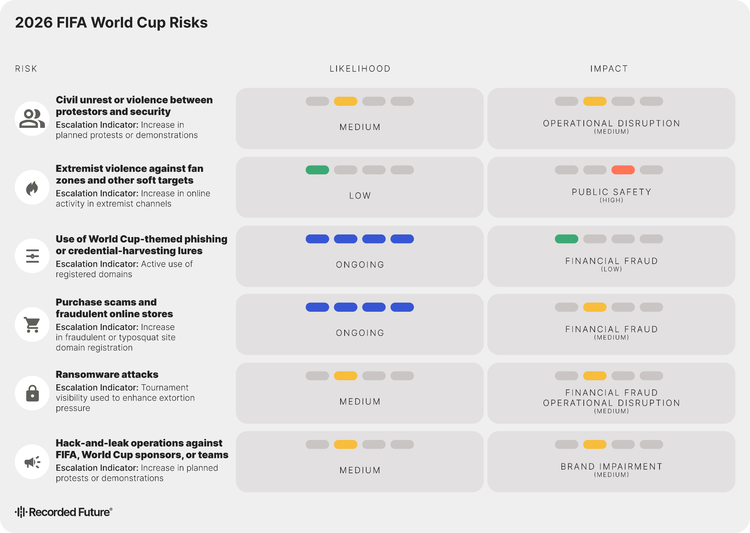
The World Cup’s global profile creates an attractive target environment for a wide range of threat actors. Cybercriminals are already exploiting tournament demand through fraudulent domains, fake stores, credential-harvesting sites, and advertising campaigns. Hacktivists and influence operators will likely try to use the event’s visibility to amplify political narratives or claim responsibility for disruptive activity. At the same time, public safety officials must manage the physical security challenges associated with large crowds, soft targets, protests, transportation hubs, hospitality infrastructure, and fan zones.
Together, these risks create a blended cyber-physical threat environment that requires coordination across public safety, cybersecurity, fraud, legal, communications, brand protection, executive protection, travel security, and third-party risk teams.
Figure 1: Assessment of physical, cyber, and fraud risks affecting the 2026 FIFA World Cup
(Source: Recorded Future)